

Aug 5, 2026, 9:46:01 AM• Pole Line Hardware • Aerial Fiber • Anchor Screws • Aerial Fiber Installation
Why Every Pole Line Hardware Installation Starts with a Strong Foundation
Learn why strong anchoring is essential for pole line hardware installations. Explore soil conditions, hardware selection, anchor screws, and long-term aerial cable infrastructure reliability.
Written by: PUPCO
Why Every Pole Line Hardware Installation Starts with a Strong Foundation
At MIROC, we support datacom and telecommunications infrastructure projects with pole line hardware and related components built for dependable field performance. Pole line reliability is determined long before the first span is tensioned or the final hardware connection is made. In aerial cable infrastructure, the visible components often receive the most attention, but long-term performance depends on what supports the system below grade. A stable foundation helps pole line hardware perform as intended through changing soil conditions, weather exposure and daily load demands.
For utilities, datacom networks, and telecommunications projects, proper anchoring is not a minor detail. It is a core part of building safe, dependable performance into the installation from the start. When the anchoring solution is matched to site conditions and application requirements, crews are better positioned to maintain alignment, resist movement, and support service continuity over time.
Why proper anchoring matters in pole line hardware installation
Every pole line system transfers load into the ground. That includes tension from guying, forces introduced by aerial cable routing, and stress created by wind, moisture cycles, and seasonal ground movement. If the foundation is not designed for those conditions, the rest of the installation can be affected.
Proper anchoring helps:
- Maintain pole stability under expected load conditions- Reduce the risk of movement, leaning, or shifting over time
- Support dependable performance for aerial cable infrastructure
- Improve long-term safety and service reliability
- Minimize avoidable maintenance, rework, and project delays
A strong foundation also supports more predictable project outcomes. Installers, engineers, and procurement teams all benefit when the right hardware is selected early and matched to the field environment. That kind of planning supports supply chain resilience, helps avoid changes late in the job, and keeps crews moving with fewer disruptions.
The hidden conditions that affect below-grade performance
Ground conditions vary significantly from one jobsite to the next. Two installations may appear similar above ground while requiring different anchoring solutions below ground. That is why site evaluation remains an important step in the planning process.
Key environmental and soil considerations include:
1. Soil composition
Loose, sandy, rocky, or clay-heavy soils each behave differently under load. Soil density and composition influence how well an anchor can be installed and how effectively it will hold over time.
2. Moisture and drainage
Water exposure changes soil behavior. Saturated ground, poor drainage, and repeated freeze-thaw cycles can affect stability and holding capacity. Installations in wet or variable environments should account for those shifts before hardware is selected.
3. Corrosion exposure
In coastal, industrial, or high-moisture settings, corrosion resistance becomes a critical part of hardware selection. Materials and finishes should align with the environment to help preserve dependable performance and reduce premature replacement.
4. Load requirements
The expected load on the installation should guide the anchoring approach. Cable weight, guy tension, environmental loading, and service demands all influence which foundation hardware is appropriate.
5. Access and installation conditions
Crew access, available equipment, and field constraints can also affect product selection. The most suitable anchoring solution must work not only in theory, but also in real installation conditions.
How to select the right hardware for the application
Selecting hardware for pole line installations is not about choosing a general-purpose option and hoping it fits the site. It requires a close match between application demands, site conditions, and performance expectations.
A practical selection process should consider:
- Soil type and below-grade conditions- Required holding strength
- Corrosion resistance needs
- Compatibility with the overall pole line hardware system
- Installation method and crew requirements
- Expected service life and maintenance expectations
When those factors are reviewed together, teams can choose a durable solution that supports both immediate installation needs and long-term system performance.
The role of anchor screws in aerial cable infrastructure
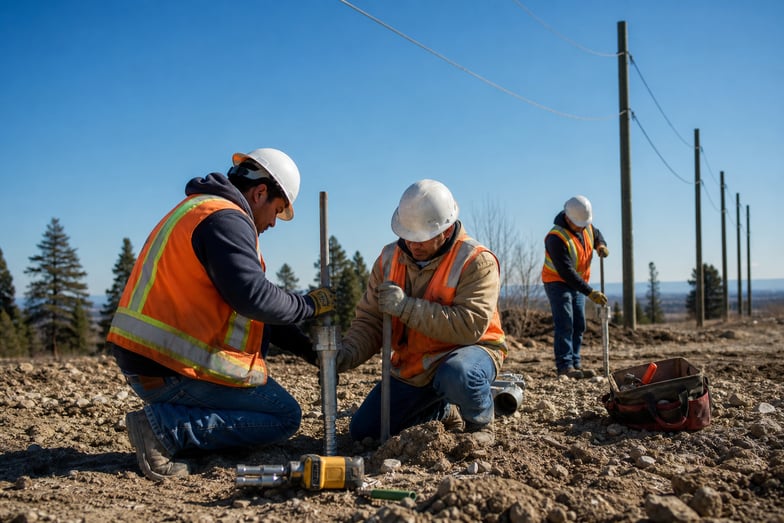
Anchor screws are an important part of many pole line and guying applications because they help transfer load into the ground with stability and consistency. When matched to the right conditions, they support dependable aerial cable infrastructure by helping maintain tension, alignment, and structural support.
Their value comes from more than simple load holding. Anchor screws can also help crews address site-specific conditions with a foundation component designed for demanding applications. In the right use case, they contribute to:
- Stable support for guyed pole line assemblies- Improved reliability in changing environmental conditions
- Efficient installation planning for field crews
- Long-term performance when paired with the proper material and design requirements
Because below-grade conditions directly affect how anchor screws perform, product selection should always be based on the application rather than assumptions from a previous job. A reliable partner with technical expertise can help teams review those requirements before materials are released to the field.
Planning for long-term reliability
Long-term reliability starts in the planning phase, not after installation problems appear. The right foundation hardware helps reduce risk, but dependable performance also depends on coordination across design, procurement, and field execution.
To support long-term results, project teams should:
- Evaluate the installation environment early- Review expected loads and support requirements
- Match hardware materials and design to corrosion and soil conditions
- Confirm compatibility across the full pole line hardware assembly
- Work with suppliers who can provide technical expertise, quick lead times, and consistent inventory supply
This approach helps reduce delays tied to product mismatch, material availability issues, or avoidable field adjustments. It also reinforces a customer-first approach that supports safety, schedule confidence, and dependable performance over the life of the installation.
Why foundation decisions affect the full project timeline
Foundation choices influence more than engineering outcomes. They also affect purchasing timelines, installation efficiency, and long-term maintenance planning. When the correct anchoring solution is specified early, teams are better equipped to keep projects on track and avoid interruptions caused by missing or unsuitable hardware.
For distributors, utilities, and prior customers managing complex infrastructure schedules, that matters. Strong planning at the foundation level supports efficient execution above ground, where every delay can affect labor, scheduling, and service readiness.
Build pole line installations on a stronger starting point
What is above ground is only as reliable as what is below it. Aerial cable infrastructure depends on a strong foundation, and that starts with choosing anchoring hardware that fits the environment, the load, and the long-term demands of the installation.
At MIROC, we understand that dependable performance begins with informed product selection and consistent supply. From pole line hardware to the components that support it below grade, the goal is the same: help customers build with confidence, reduce risk, and keep projects moving.
If you are reviewing anchoring options for an upcoming installation, the best next step is to evaluate the application carefully and align the hardware choice with actual field conditions. A strong foundation is not just the start of the installation. It is the foundation of long-term reliability.
.jpg)